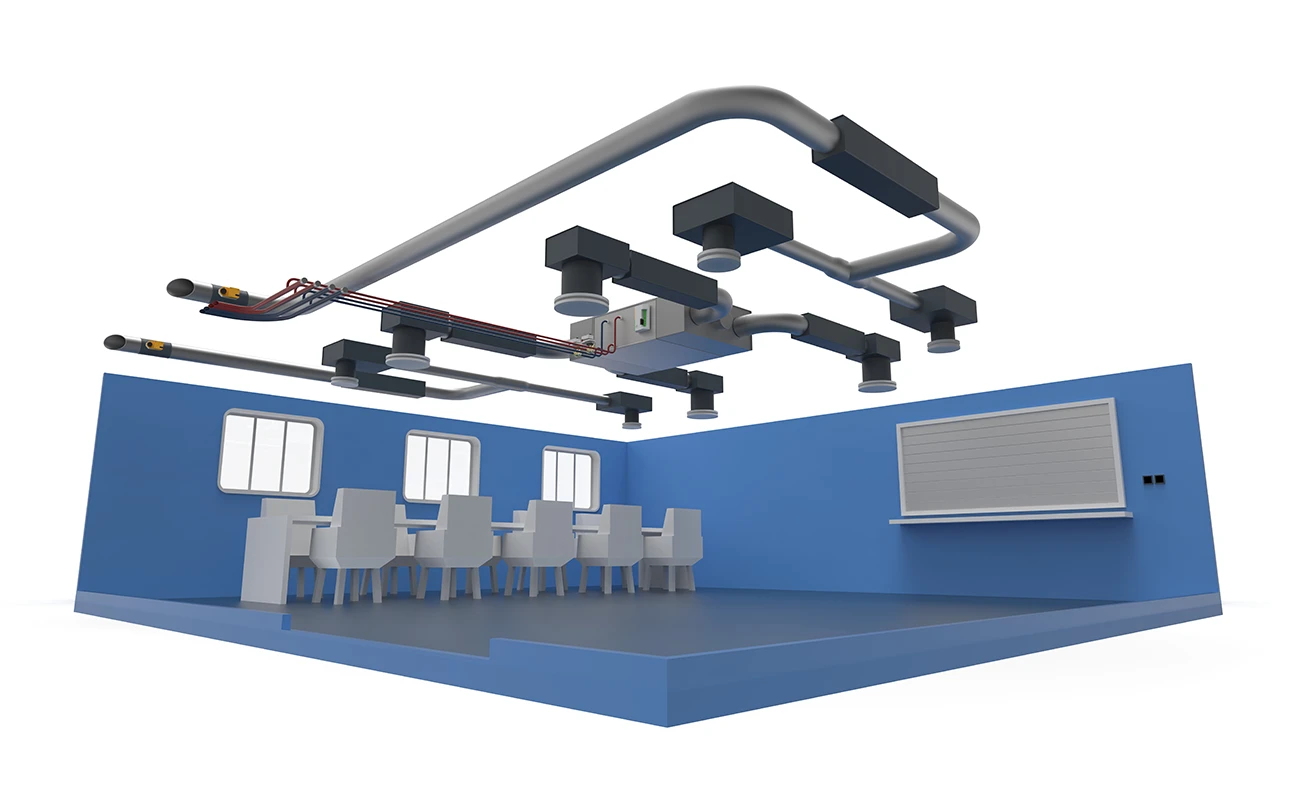
Ventilation systems are designed to handle a wide range of indoor and outdoor climate challenges, ensuring optimal comfort and air quality. To achieve this, systems are typically sized for peak demand conditions — accounting for factors such as outdoor temperature fluctuations, solar radiation and occupancy levels. Since these conditions constantly change, however, ventilation systems often end up running with more capacity than needed
By dynamically adjusting airflow based on real-time demand, we can significantly reduce unnecessary energy consumption while maintaining a comfortable and healthy indoor environment.
Key Benefits of Demand-Controlled Ventilation:
Lower airflow through the system – reduces pressure drop for more efficient operation
Decreased air velocity – reduces noise levels, improving comfort
Less air movement required – reduces fan energy consumption and operating costs
Minimized intake of cold outdoor air in winter – lowers heating demand
Minimized intake of warm outdoor air in summer – reduces cooling load
How It Works
Ventilation adjustments are made through modulating dampers and speed-controlled fans, which automatically regulate airflow based on real-time data from sensors monitoring temperature, air quality, CO₂ levels and occupancy — ensuring air supply matches actual demand rather than running at full capacity at all times.
By implementing demand-controlled ventilation, we create a more efficient, cost-effective and sustainable onboard climate system.