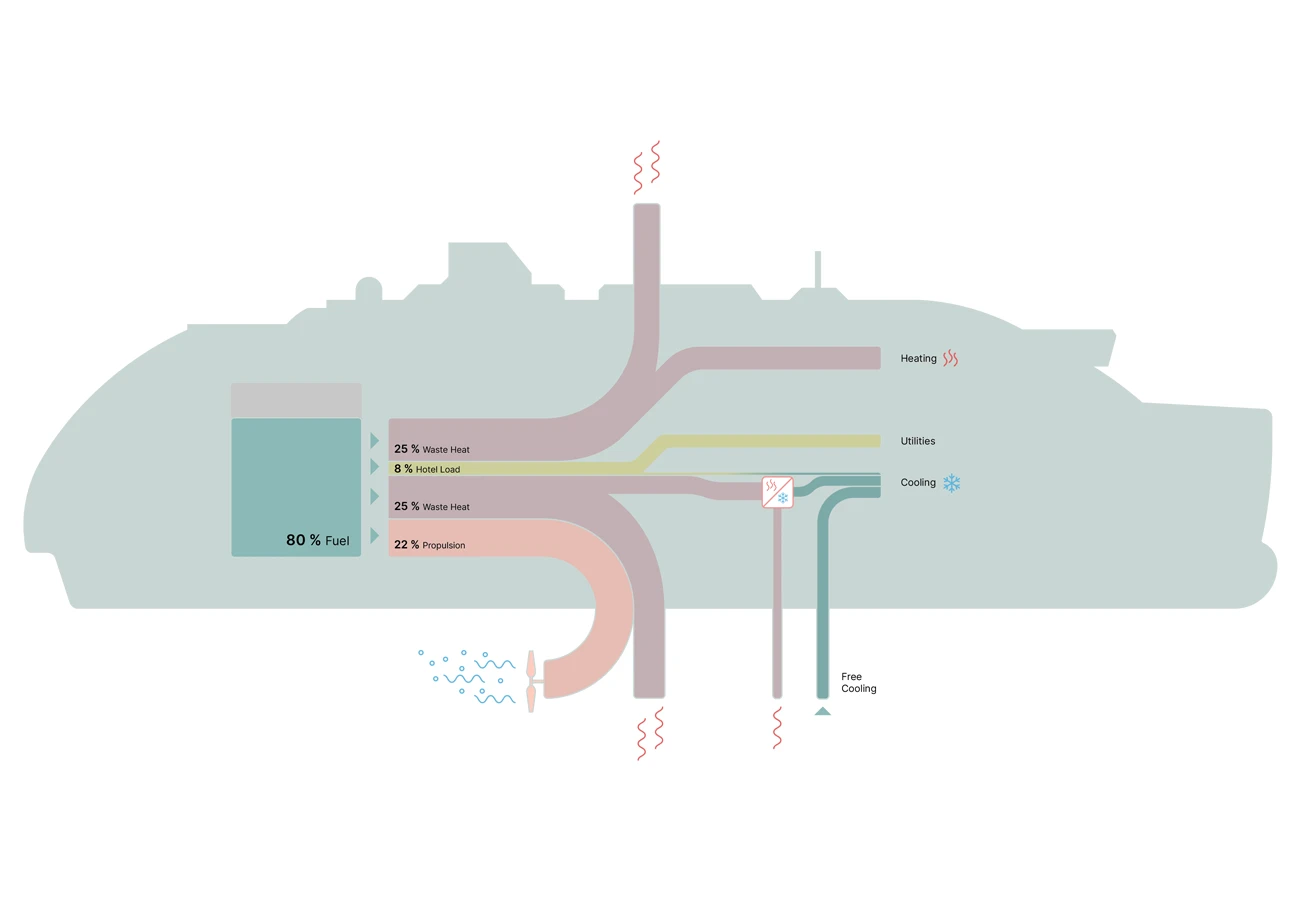
Figure 1: Example of energy flows in a vessel and the possible impact on fuel consumption when utilizing free energy. The system makes efficient use of waste heat by directly supplying heating through a waterborne system and converting it into cooling via an absorption chiller. In parallel, cold seawater is utilized for direct cooling of the vessel.
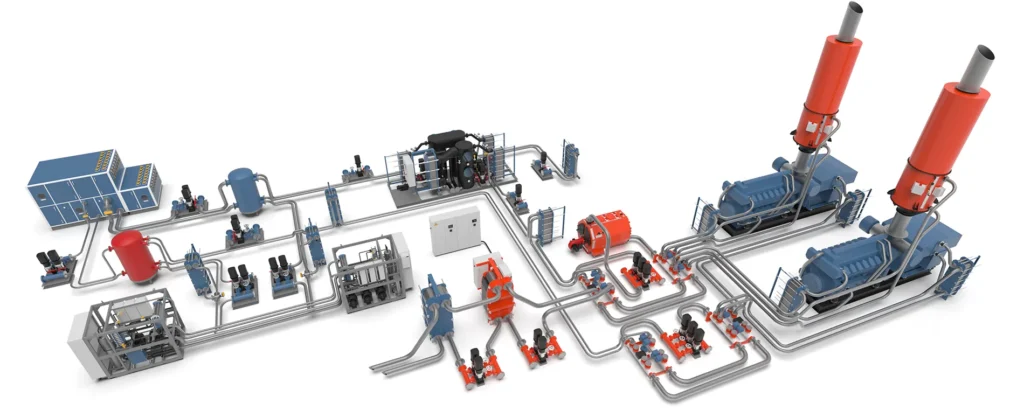
The Thermal Energy Management system integrates multiple innovations to ensure that heating and cooling demands are met with minimal electrical energy consumption.
Coefficient of Performance (COP) is often used to describe the efficiency of an individual component, such as a chiller or a heat pump. For example, it expresses how many kilowatts of cooling or heating are produced per kilowatt of electrical power input. However, component COP alone does not fully reflect the overall efficiency of the complete installation.
For this reason, system COP is far more important than component COP when evaluating real energy performance. System COP includes not only the heating and cooling produced, but also the total electric power required to generate, control and distribute that energy throughout the system. This results in a much more realistic measure of how efficiently the system operates in practice.
System COP = (kW cooling + kW heating) / kW electricity
For reference, residental heat pumps typically achieve a COP in the range of 3-4. Since Esvagt Robert Boyle came into operation, the heat pumps have remained redundant and have not been required for operation.
By focusing on the use of free energy sources, such as waste heat from generators and free cooling from seawater, the system reduces its reliance on active components. In combination with absorption chillers that efficiently convert waste heat into cooling, heat pumps are only used when required. Intelligent pump control further ensures that only the required amount of heating and cooling is distributed, which reduces the electrical energy consumption of the pumps. Together, these measures contribute to achieving a high system Coefficient of Performance (COP).
While component efficiency, such as the COP of a heat pump or the use of IE4-rated electrical motors for pumps, plays an important role, designing HVAC systems based on how they operate is even more important for reducing overall energy consumption. The most energy-efficient component is ultimately the one that does not need to operate. By adapting the system to make use of available free energy sources, a comfortable indoor environment can be maintained without unnecessary energy use. Design choices such as water temperatures, proper sizing of heat exchangers and the use of demand-controlled pumps, often have a greater impact than selecting equipment with the highest COP or IE rating available on the market.
At Teknotherm we take pride in delivering such high-end systems in close collaboration with high-end customers focused on reducing their CO2 emissions and operational costs. Together with the crew, we continue to fine-tune and further optimize the TEMS, based on operational data and tailoring it to the operational pattern.
Initial performance data has shown that the TEMS has provided both heating and cooling without running a single compressor, relying exclusively on free energy sources. Optimal sizing of the consumers, combined with a chilled water supply temperature of 10 °C, has enabled for the vessel to run free cooling for such an extended period. This has resulted in a system COP recorded at ~11. Meaning that for every 1 kWh of electricity consumed, 10 kWh of heating and cooling have been delivered. However, through an ongoing pump optimization we expect to improve this COP to around ~20.
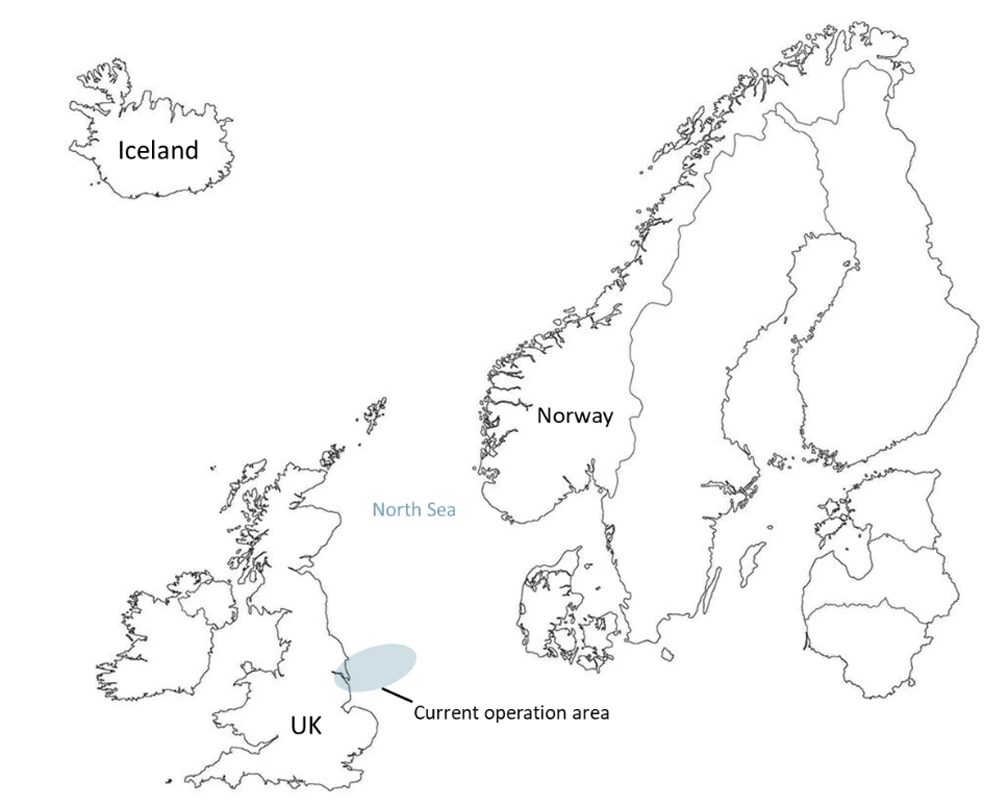
Esvagt Robert Boyle is one of the first SOVs in the world to integrate the use of absorption cooling, where high temperature waste heat is converted into chilled water through thermal compression by absorption. This enables the production of significant cooling capacity with minimal electrical input. As the vessel now transitions into the active cooling season, when seawater temperatures are too high for free cooling, the absorption chiller will start to produce cooling at a very high COP. The absorption chiller is designed and manufactured by Cool4Sea and is the most flexible absorption chiller on the market. With good system integration, it is a flexible generator not depending on stable water temperatures or a continuous load.