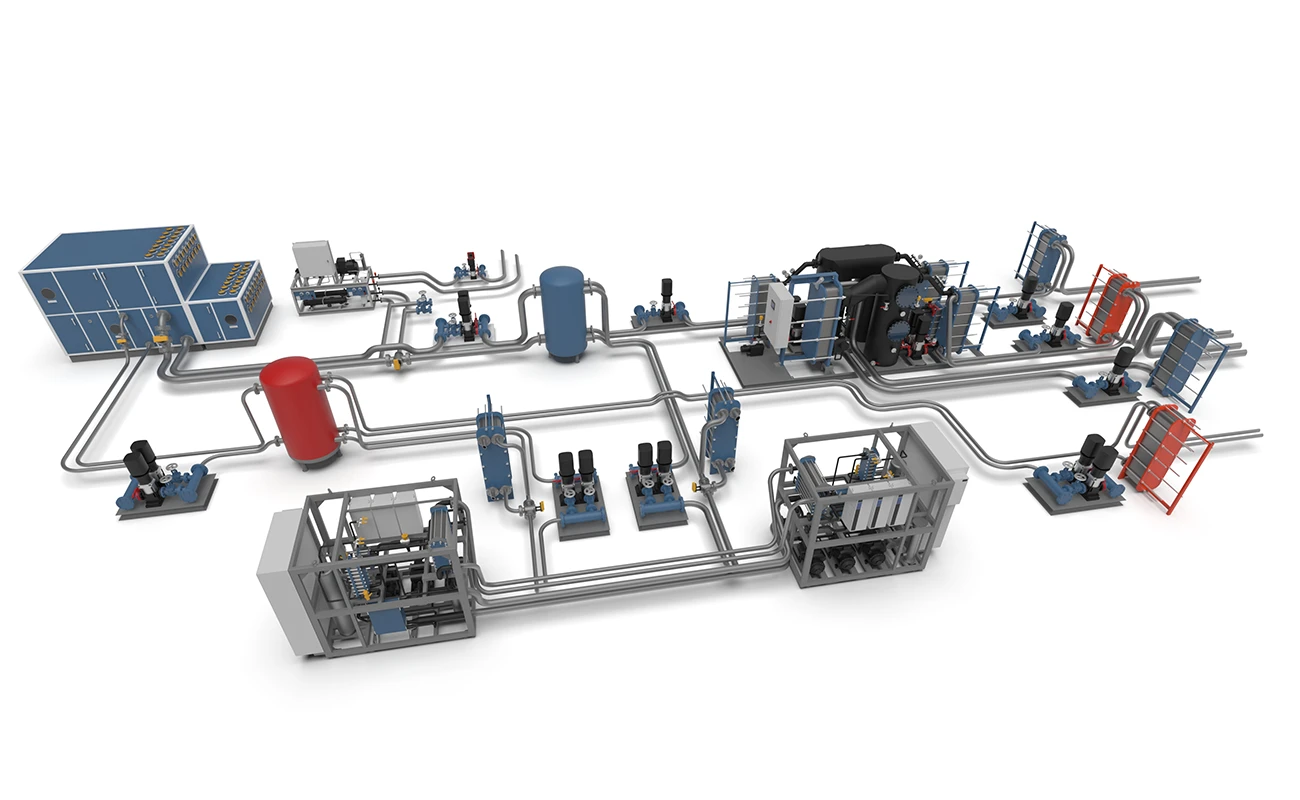
On modern vessels, heating and cooling are no longer isolated support systems. They are part of the vessel’s total energy balance, and every kilowatt hour should be used where it creates the highest value. A Thermal Energy Management System (TEMS) makes this possible by connecting heating, cooling and energy recovery into one smart and controllable system.
TEMS manages the vessel’s thermal energy as a single integrated system. Cooling loads such as battery cooling, HVAC cooling, refrigeration and technical equipment can also serve as available heat sources — energy that can be recovered, upgraded and reused wherever heating is needed onboard.
By connecting heat pumps, chillers, cooling and heating circuits, thermal storage, free cooling and demand-controlled pumps, TEMS reduces unnecessary energy production and helps optimize the vessel’s total energy use.
For electric, hybrid and conventional vessels alike, the result is lower energy consumption, reduced operating cost and improved system efficiency.
Key functions in TEMS
Energy recovery from onboard cooling loads
Heat pumps for combined heating and cooling
Free cooling from seawater
Thermal storage for load balancing
Demand-controlled pumps and optimized water distribution
Integrated control of heating and cooling circuits
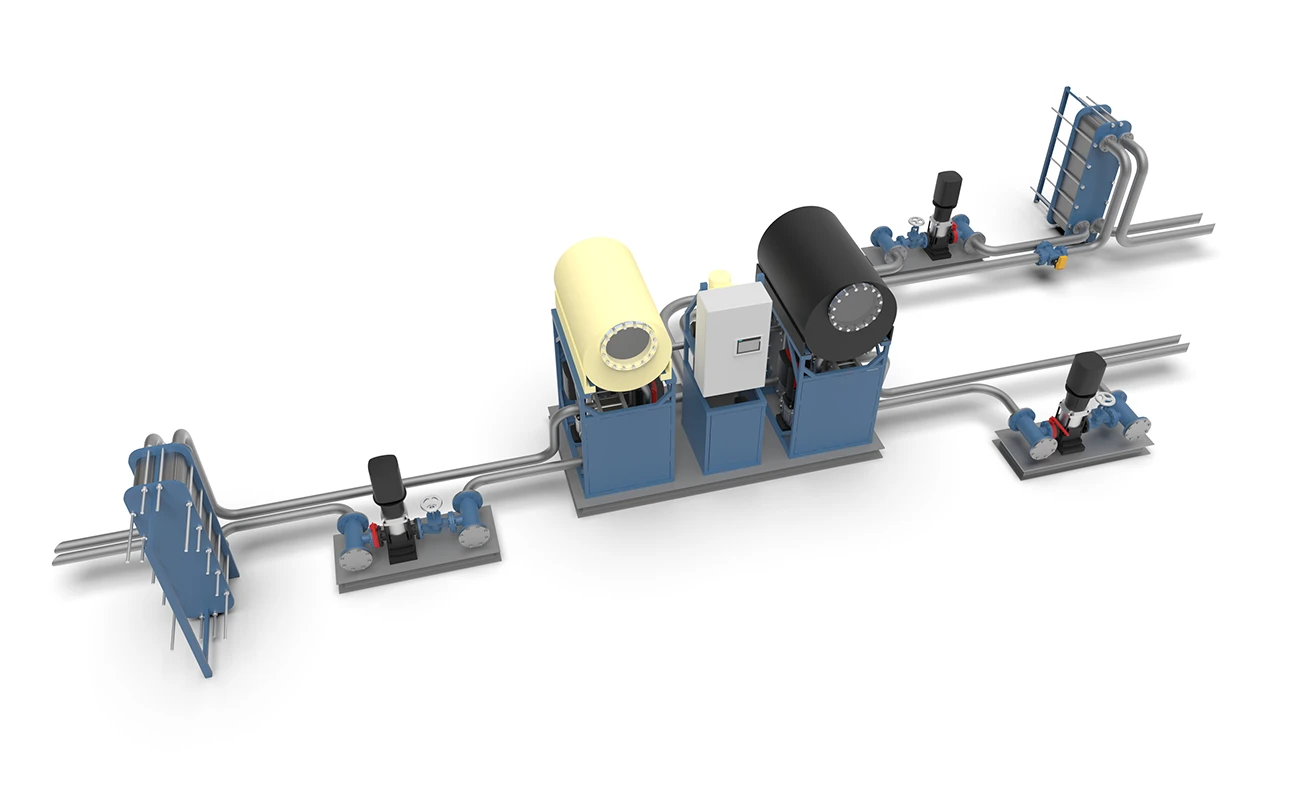
Absorption Chiller
Cooling powered by availbale heat
Where available heat exists, it can become a valuable cooling source. Absorption chillers utilize thermal energy instead of electrical power, improving overall vessel energy efficiency.
An absorption chiller uses available thermal energy to produce chilled water with very low electrical consumption. Instead of relying mainly on compressor power, the system converts heat from sources such as engine cooling water or other high-temperature circuits into useful cooling for the vessel.
This makes absorption chillers especially relevant for vessels with available heat and significant cooling demand. When integrated with the Thermal Energy Management System, the absorption chiller becomes part of the vessel’s total energy balance, working together with free cooling, heat pumps and demand-controlled pumps to reduce overall energy consumption.
For vessels operating in warmer waters, or where free cooling from seawater is limited, absorption chillers can provide an efficient alternative cooling source while reducing electrical load and improving system efficiency.
Key functions:
Converts available heat into chilled water
Reduces electrical power demand for cooling
Supports HVAC and chilled water systems
Integrates with thermal energy management
Improves energy efficiency in warm-water operation